St Petersburg
- 0 Comments
- By lucy
I arrived in Saint Petersburg on the first Thursday of the month, the day where tickets to the State Hermitage Museum and all its branches are free. Unfortunately this meant that the two lines for the Museum (one for each ticket booth) stretched all the way across the courtyard, some people had been waiting three hours already and were only halfway along the line. Instead of wasting half my day queuing I instead decided to visit the General Staff building on the other side of the courtyard. The former site of the Finance ministry, the General Staff Building now holds part of the Hermitage Museums collection, although it is not nearly enough to fill the building. Walking through the museum you alternate between exhibitions and restorations of the room’s original décor, and long empty rooms and corridors. The collection itself was slightly disjointed but was no less impressive for it. As well as modern art and military paraphernalia (including some of Napoleons banners) there was a Roman floor mosaic from Lod, Israel that dated to the 3rd century; a sizeable collection of works by the impressionists; a large collection of Renoir on loan from Paris; and a number of works by Picasso which clearly showed the development of his distinctive cubism style. The State Hermitage museum easily ate up my afternoon and the next day I resolved to check out the main collection in the Hermitage itself.
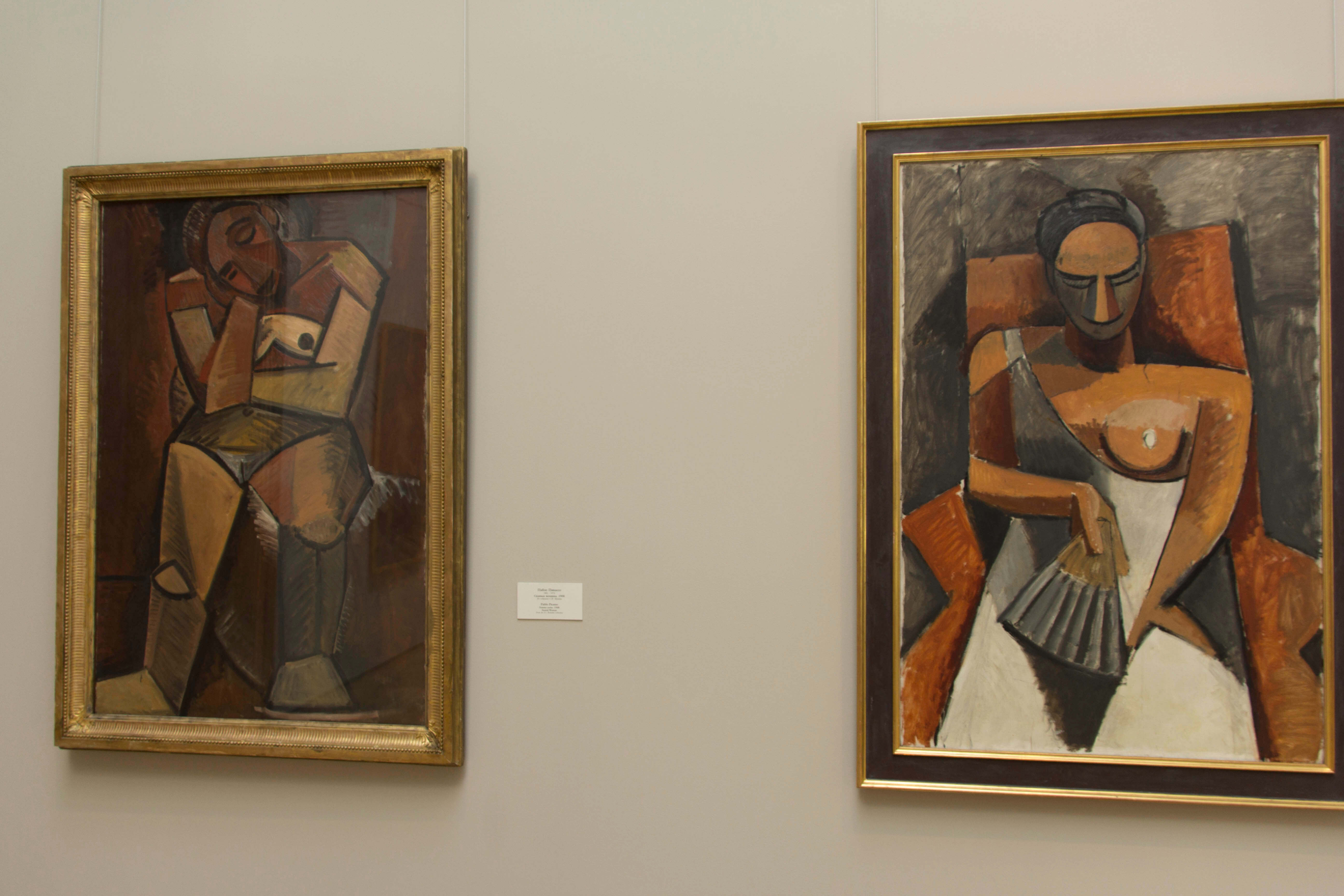
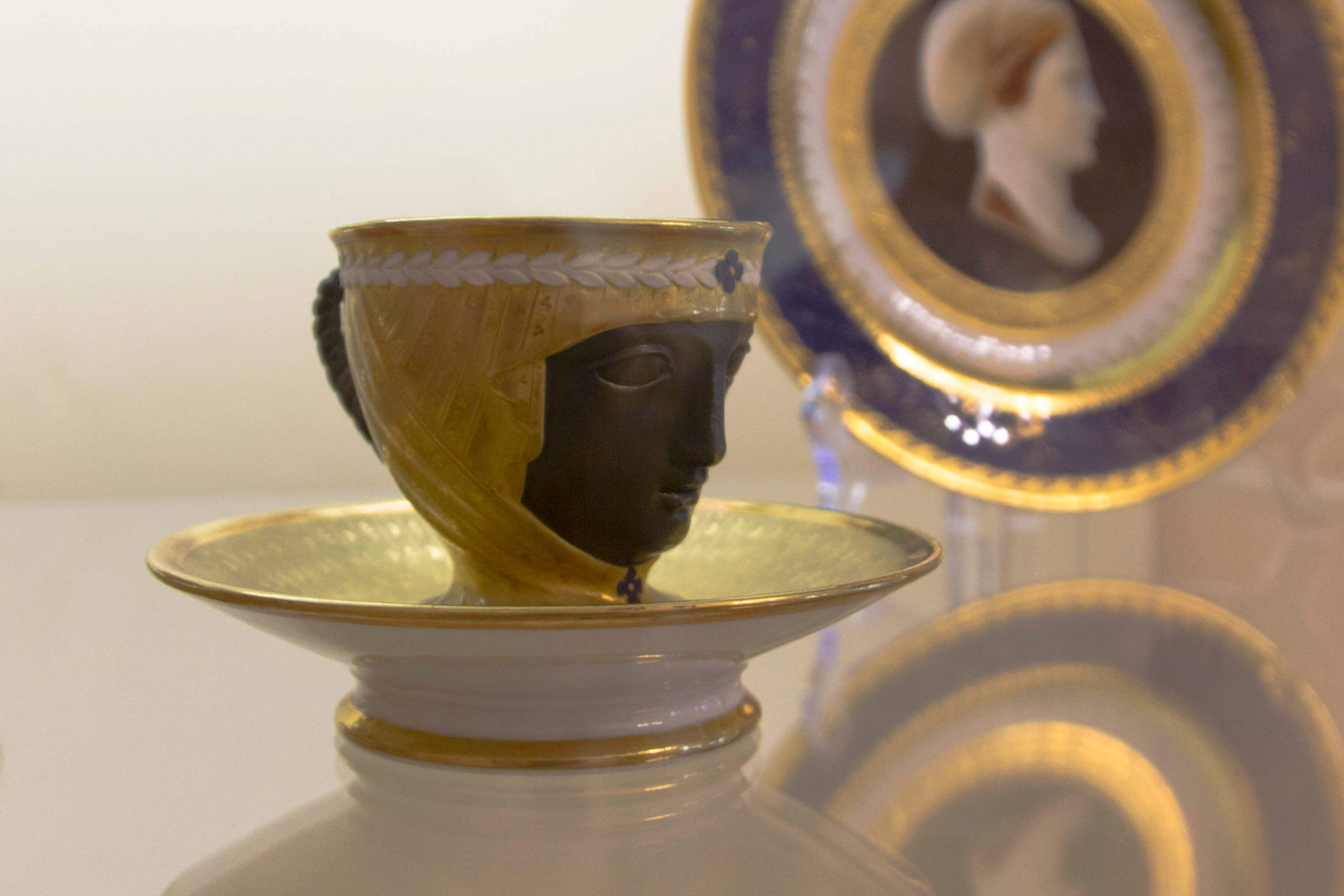
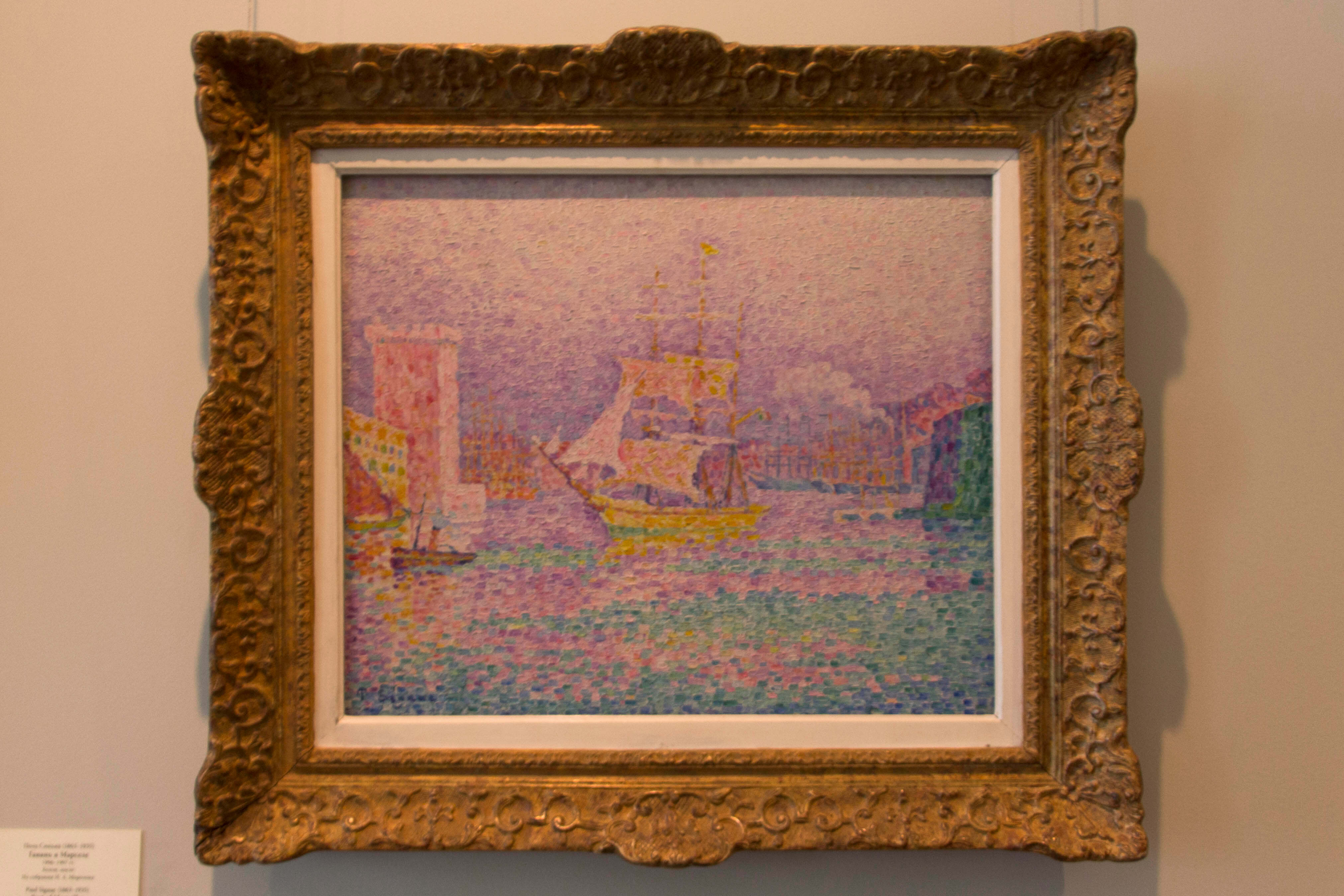
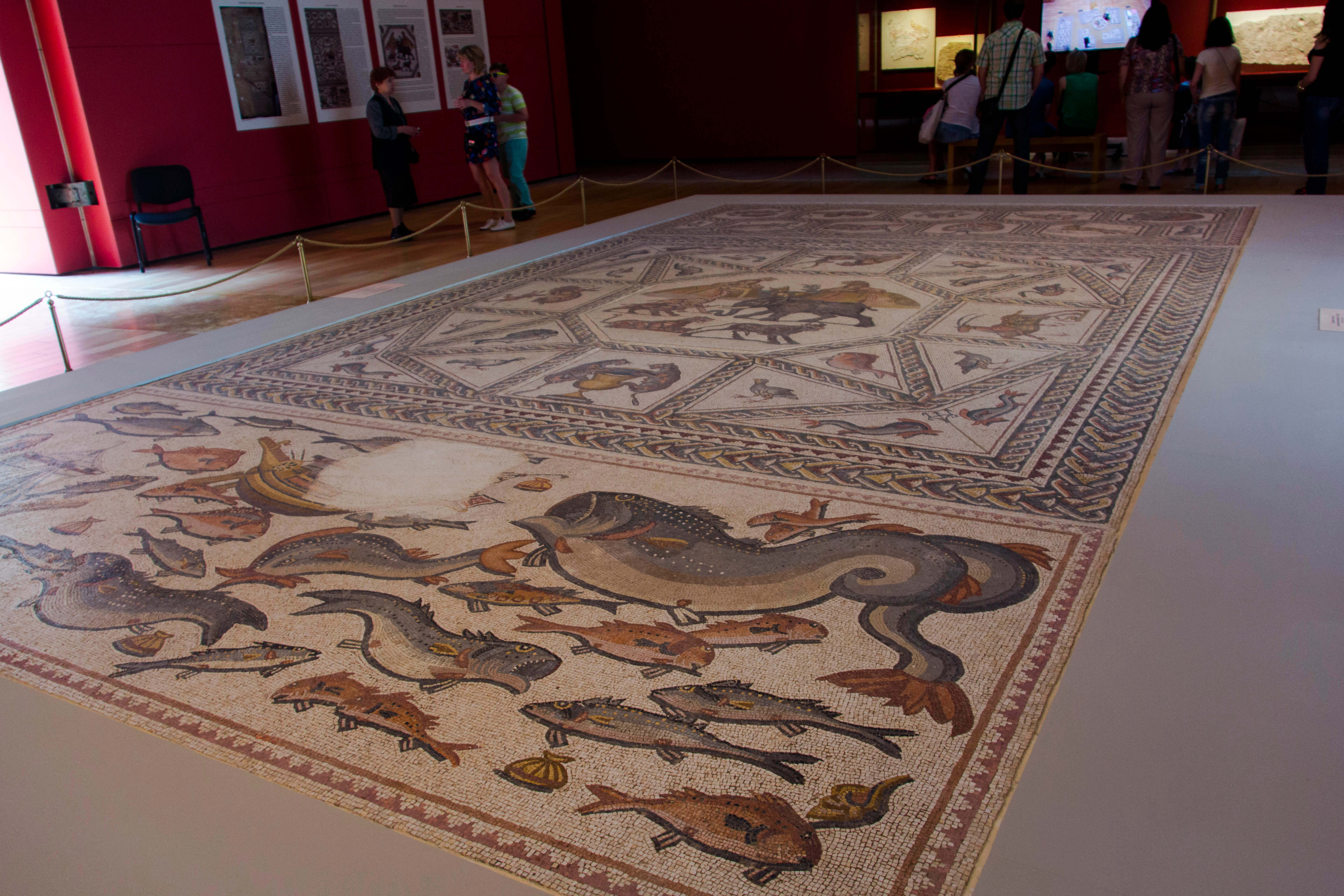
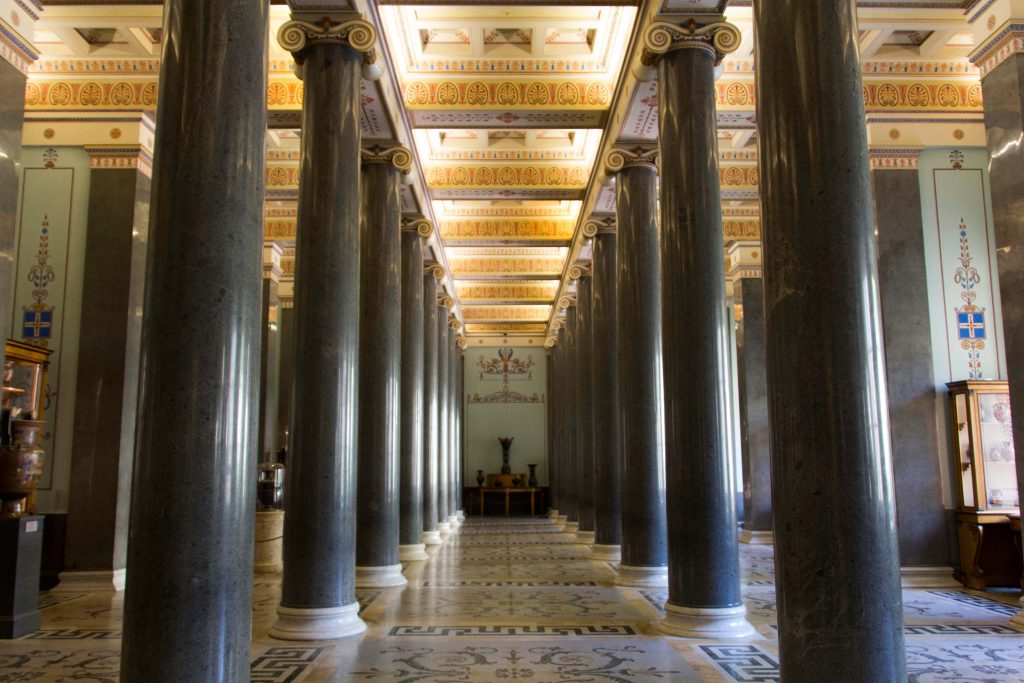
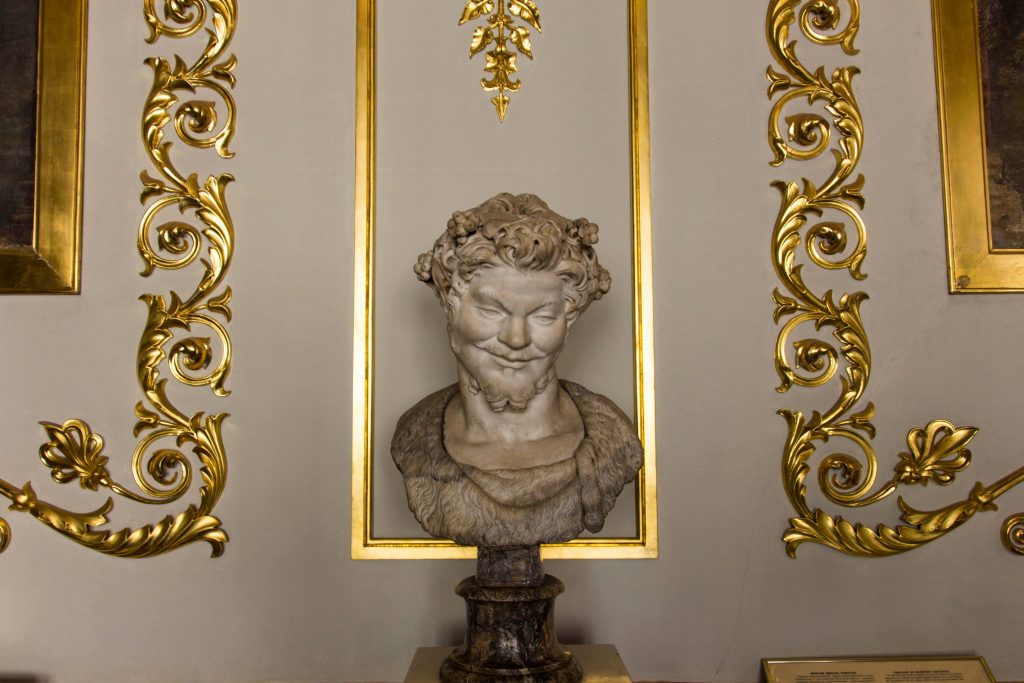
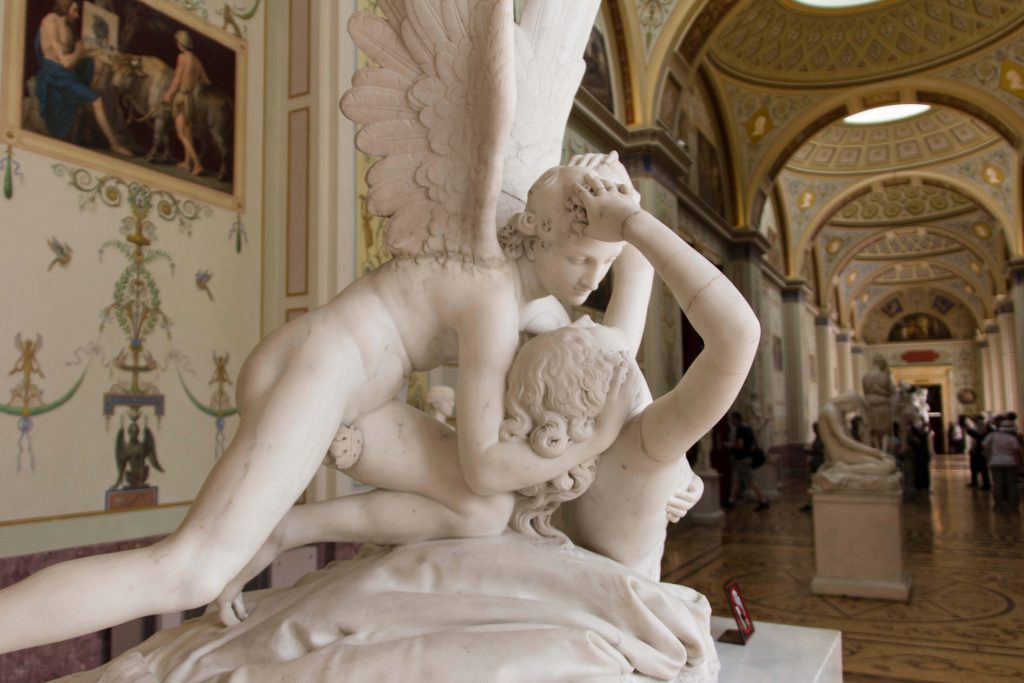
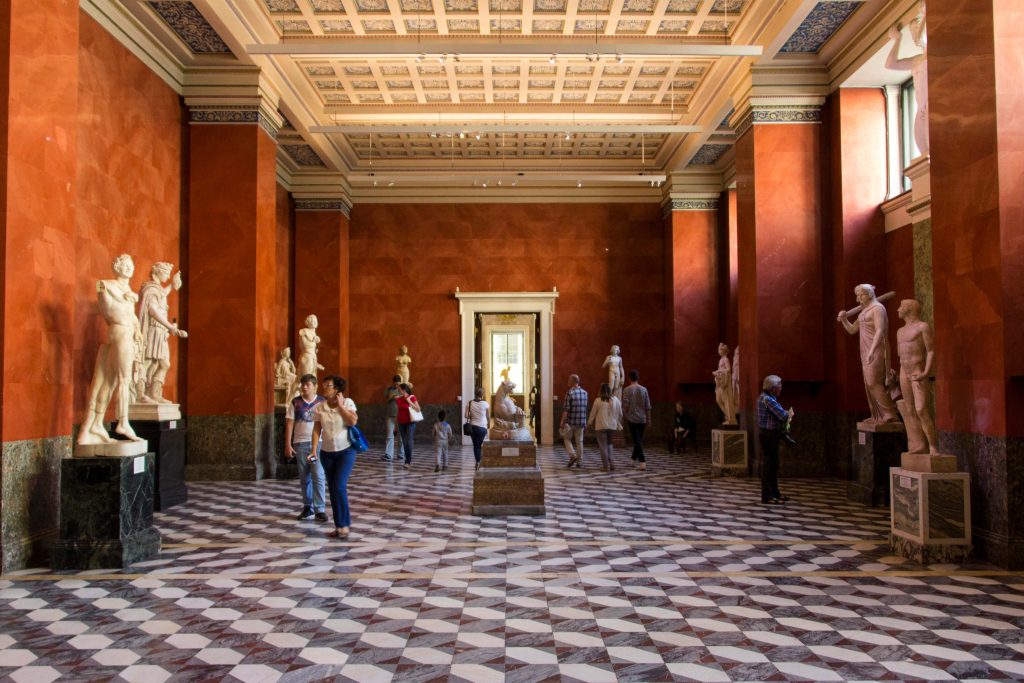
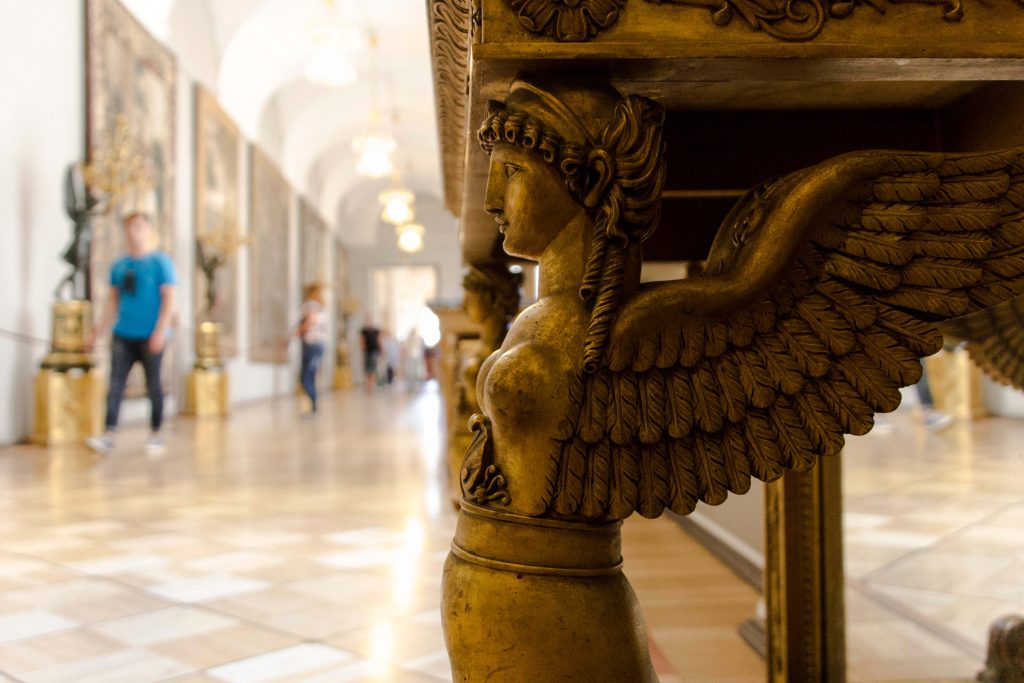
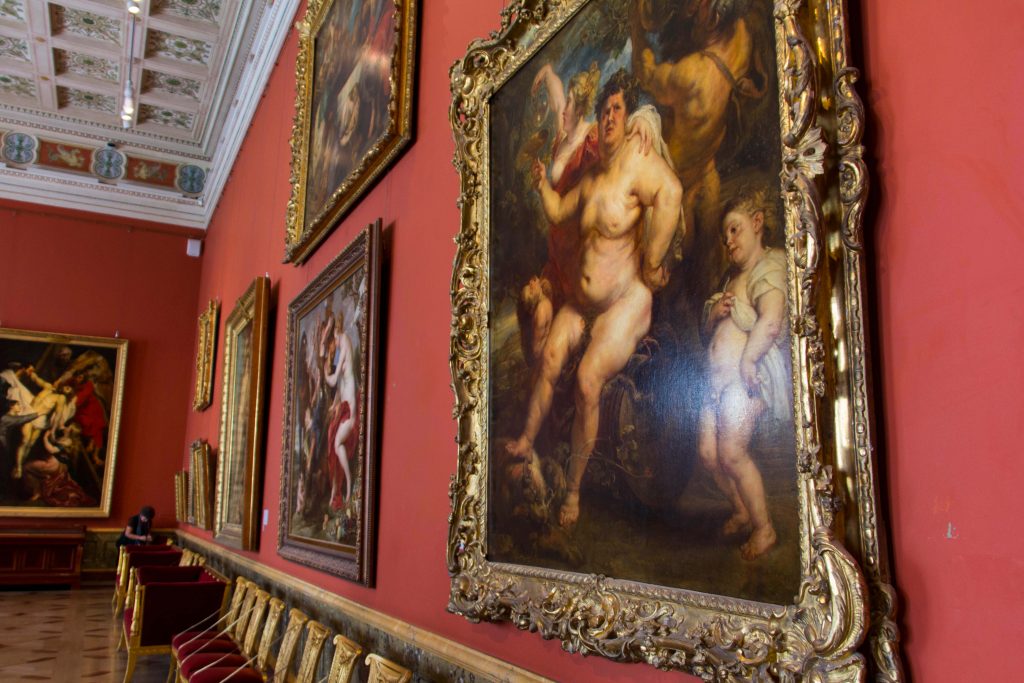
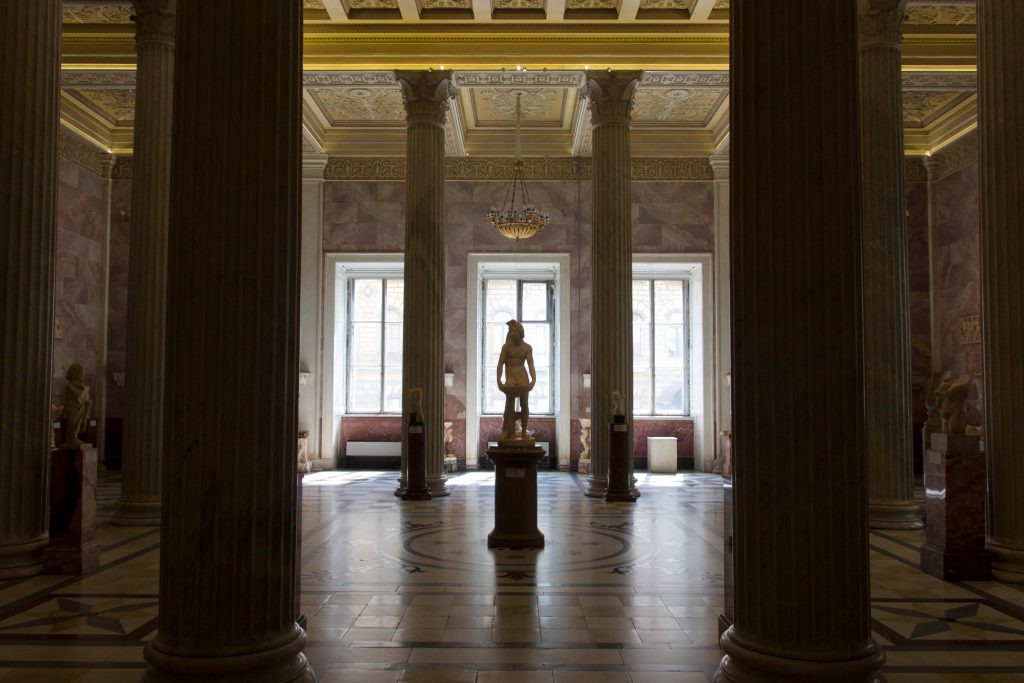
When people say the Hermitage is big they really aren’t kidding. It was established by Catherine the Great in 1764 and holds over three million items, some acquired legally, others ‘redistributed’ following the October Revolution and many more from the private collections of wealthy Germans that got caught behind the Iron Curtain. While I allowed a full day for it I still left feeling overwhelmed and that I had not seen it all. Despite my love for Hellenistic Greek sculpture, after seeing literally hundreds of these figures they begin to lose some of their impact. The same goes for the rooms upon rooms full of works by van Dyck, Rubens and Rembrandt. And while it was interesting so see what had become of all the stones and minerals that had been mined in the Urals the sheer scale of the exhibits made it difficult to fully appreciate them. Two of the most impressive examples would be the Malachite room and the Kyolan vase. The room features over two tonnes of malachite in the form of columns, fireplaces and other décor while the Kyolan vase is a huge 2.5m high vase carved from a single piece of jasper and weighing 19 tonnes. The Hermitage was grand but I feel like I need another week at least to appreciate everything properly.
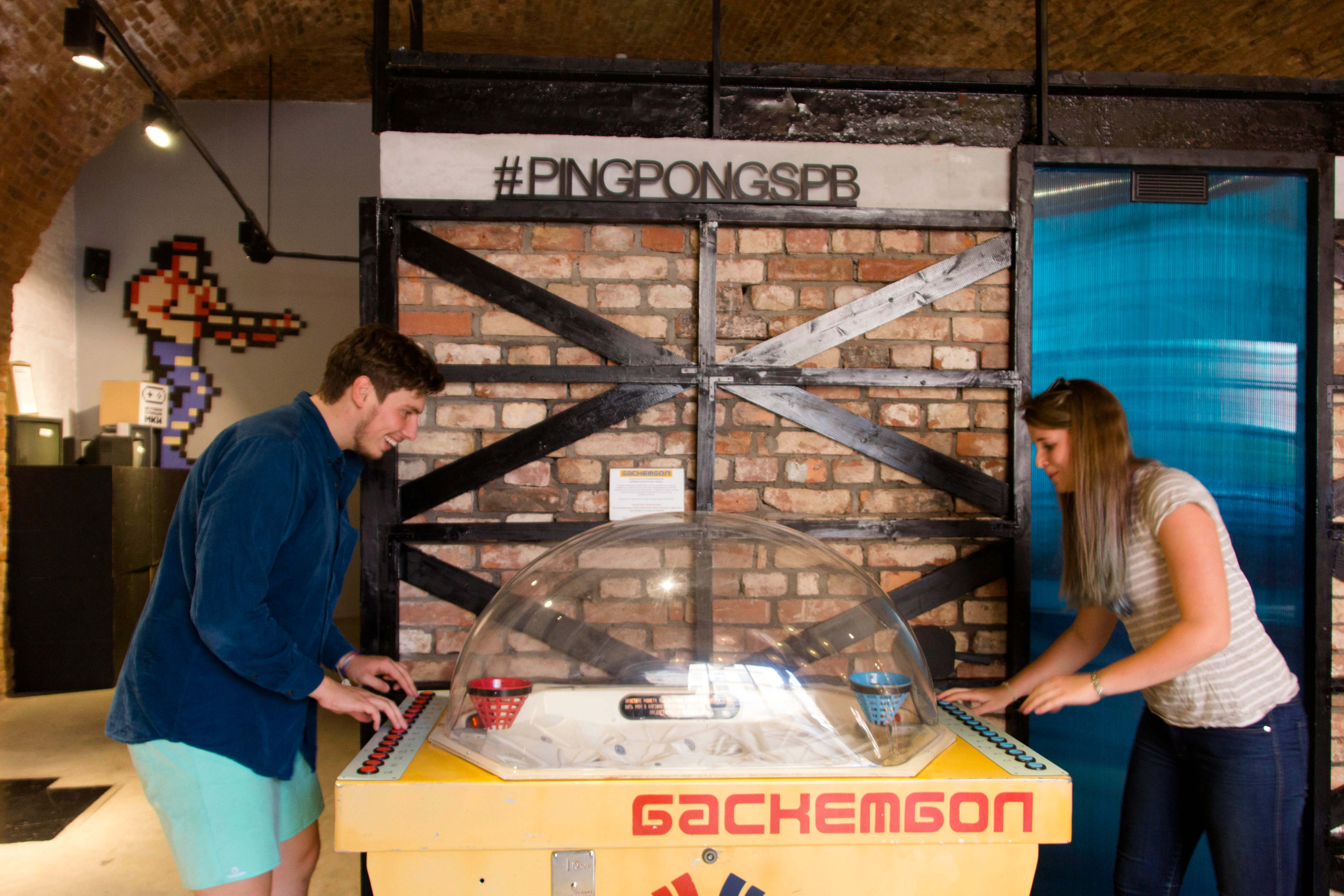
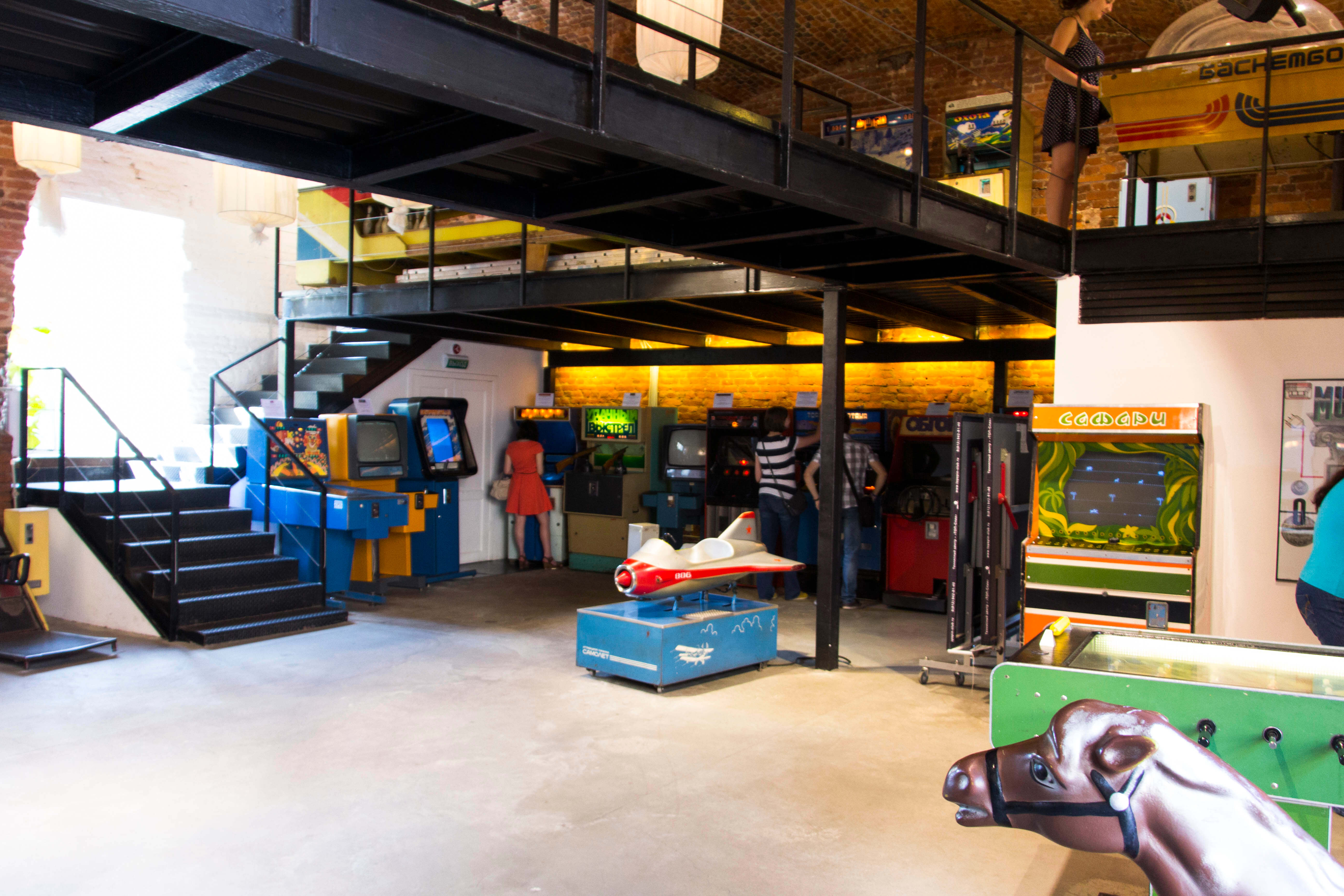
While the Hermitage may have been an incredibly sophisticated peek into Russia’s past, the Museum of Soviet Arcade Machines was decidedly…not. The Museum was like a super geeky taste for what the 80’s were like in the Soviet Union. While time had definitely taken its toll, most of the machines still worked and it was easy to pass a few hours playing the games there. They were clearly western rip offs, but all had their own soviet twist. Instead of table soccer there was basketball or hockey, instead of a punching or hitting game to test your strength you pulled on a large handle, the ships you shot at from your submarine bore American colours and the pinball machine was covered in Soviet imagery. A group of us from the hostel went and it made for a very fun way to spend the morning.
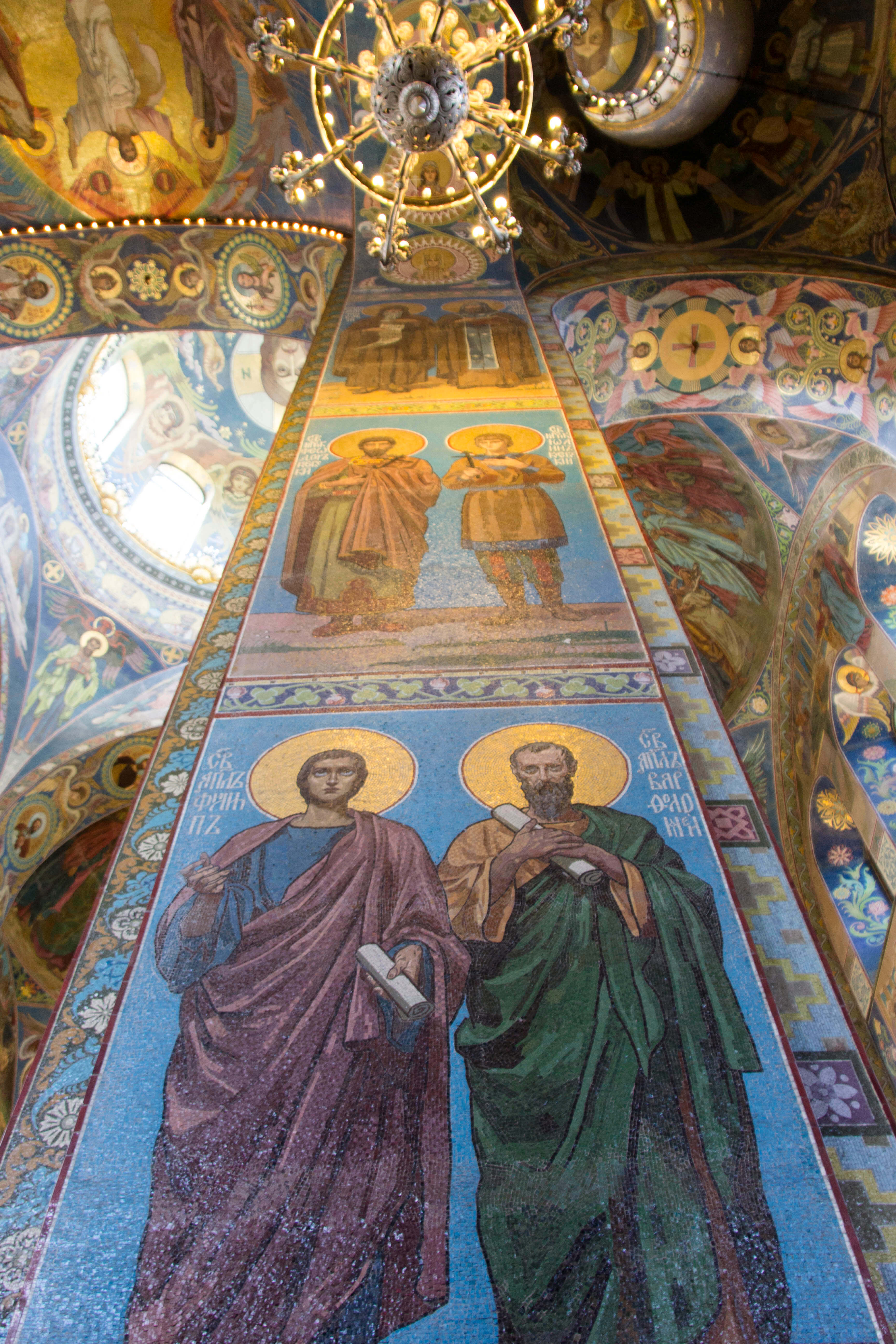
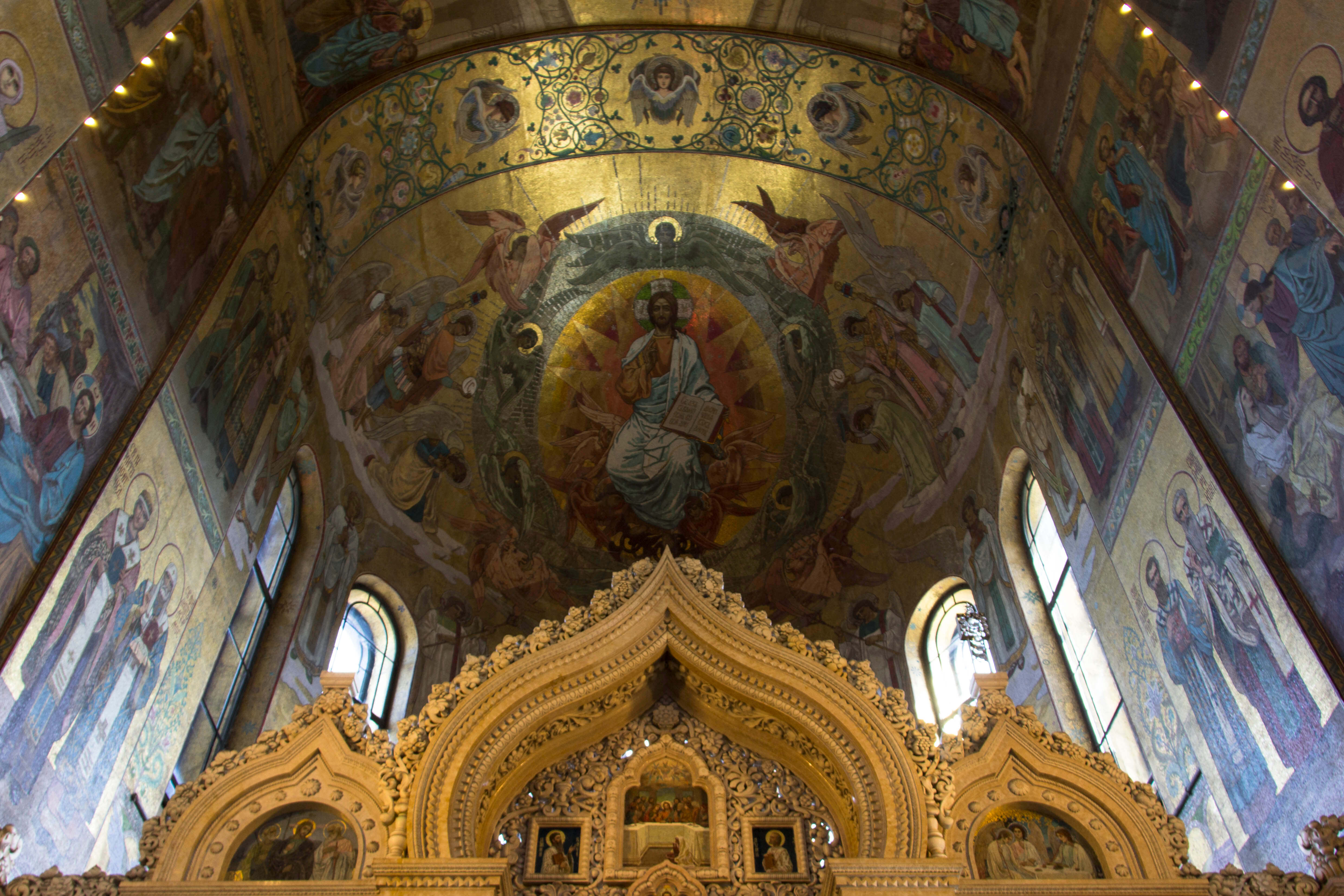
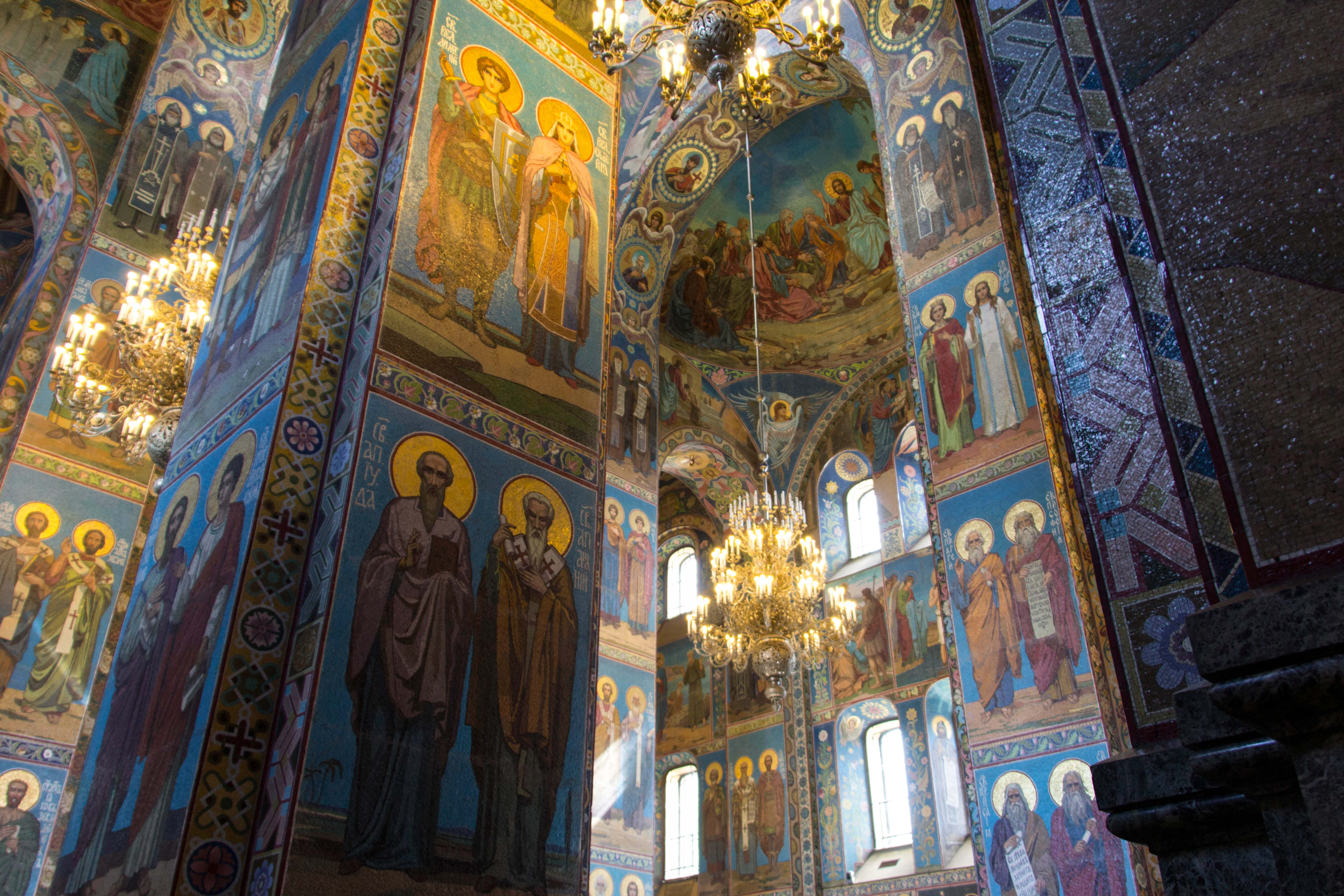
Afterwards we wandered to the Church of the Saviour on Blood, built in the late 1800’s and modelled after Saint Basils in Moscow. The most remarkable feature however wasn’t the colourful onion domes but the beautiful mosaics that lined the entire interior. Biblical scenes coated every wall and wrapped around onto the ceiling, and as you stood in the centre of the church and gazed up you were met with a huge face of Jesus staring back down at you, undoubtable one of the more impressive churches I’d seen.
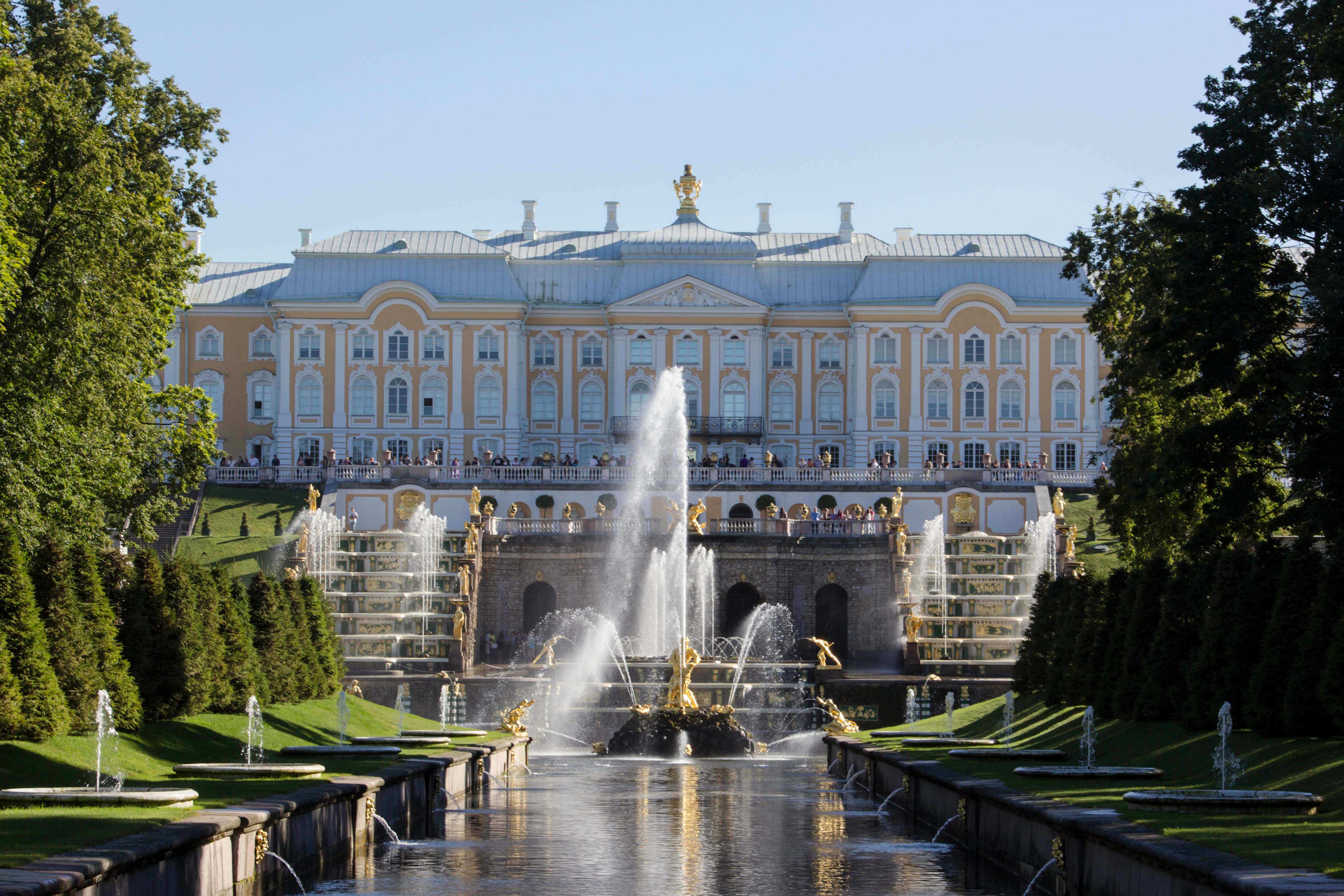
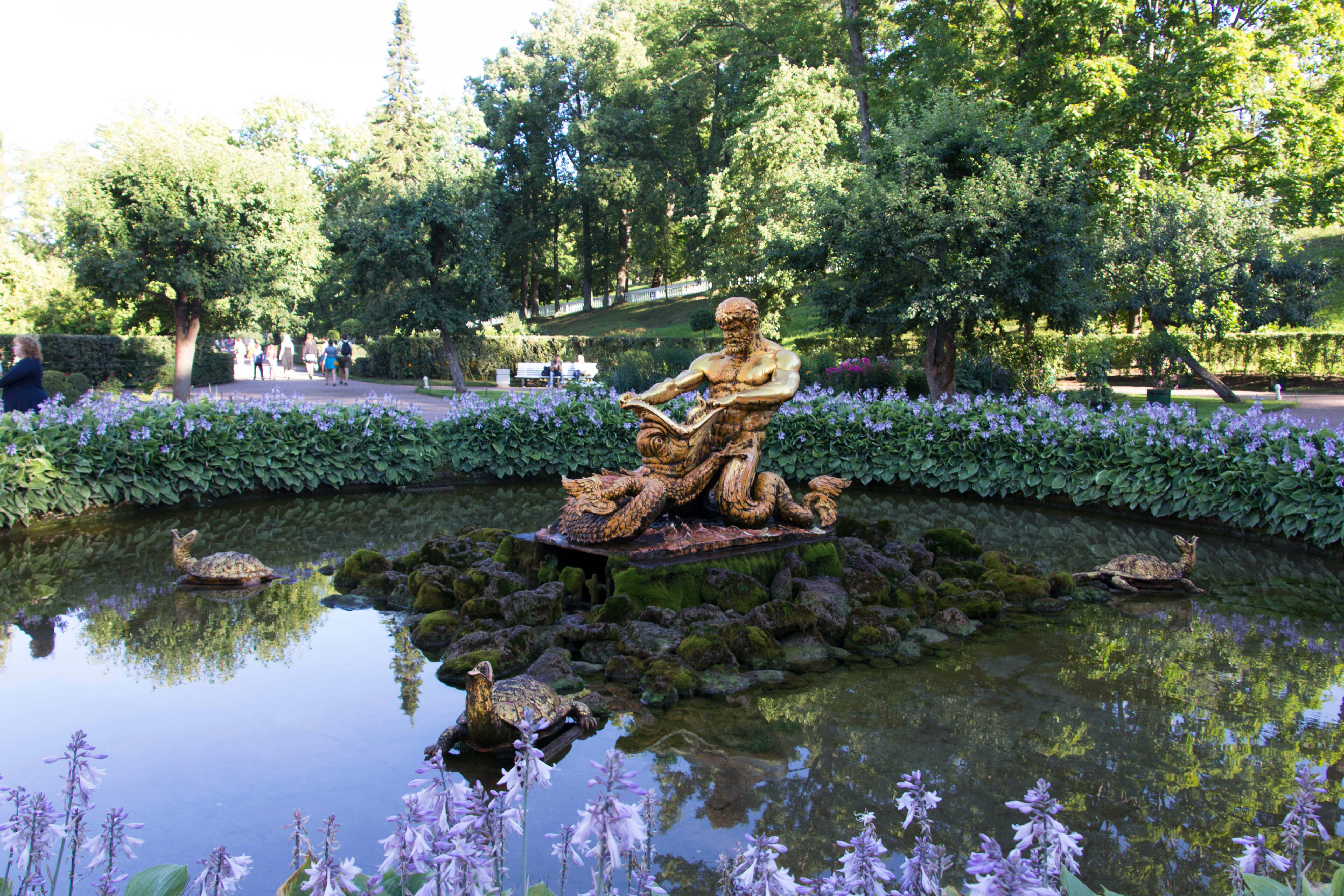
That afternoon I made the boat trip out to Peterhof Palace, a huge palace and garden complex established by Peter the Great and nicknamed ‘the Versailles of Russia’ for its manicured gardens and impressive fountains. Unfortunatly I timed it quite badly and the fountains were turned off only an hour after I got there but there was still plenty to take in.
That night for dinner I decided to treat myself to the true Russian experience and so I headed to the highly recommended Caviar Bar at the Belmont Hotel. I opted for their signature dish of Egg-in-Egg, scrambled eggs infused with truffles and topped with three different types of caviar; salmon, oscitera and beluga. This was followed by beef stroganoff and a glass of polugar, a traditional Russian vodka made with rye bread that was without a doubt the easiest vodka to drink straight (in my experience anyway). It was an over the top meal (with a price tag to match) but it was the best food I’d had since leaving home and well worth it in my opinion.
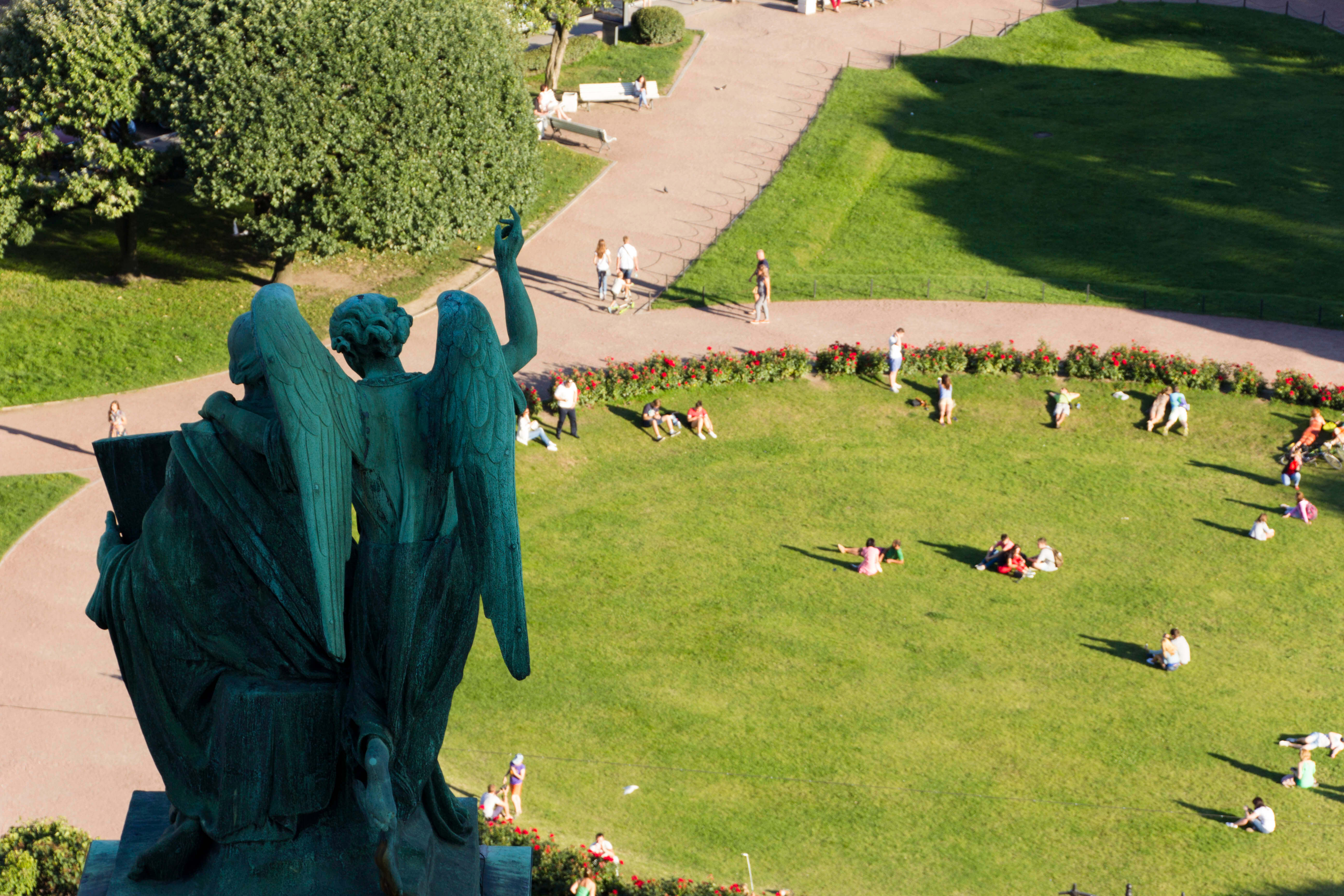
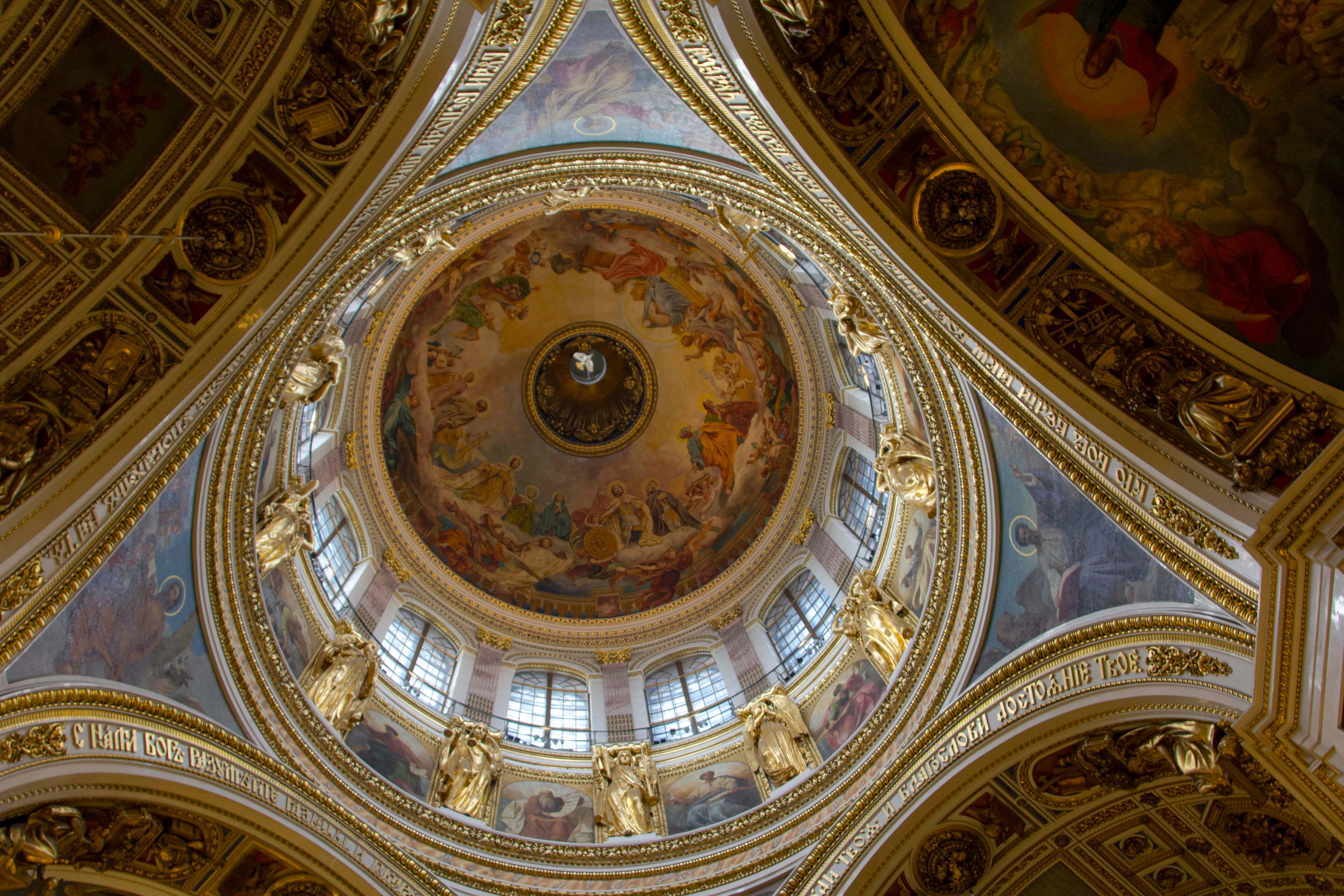
My final day in Saint Petersburg was spent visiting St Isaacs cathedral (the best view over the city was from the cathedral’s colonnade) and the Faberge museum.
The museum would only allow entry with one of their official tours (that had to be booked beforehand) and photography was forbidden, unfortunately for me I’d accidently booked for the next day with that days tickets already all sold. I was however able to look really upset until the girl took pity on me and let me join my preferred tour. I’m not proud of that but I can recommend fake crying as a method of getting what you want. As well as the famed eggs (Easter gifts from the Tsar to his family) the museum also contains various other pieces by Faberge and his contemporaries: desk clocks, writing sets, cigarette cases and tableware all feature, all done in the beautiful enamel he was so famous for.
Comments